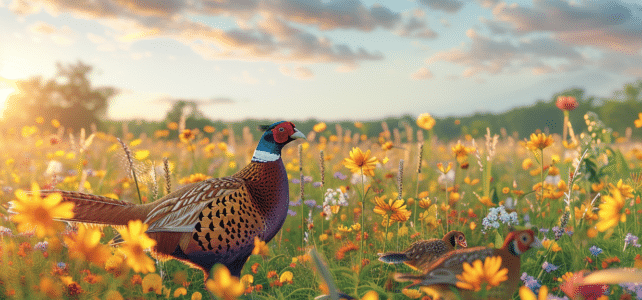
The study of the development of young galliformes, particularly pheasants, is crucial for understanding the challenges of breeding and the preservation of these species. Researchers are examining the different growth phases of pheasants from the moment they hatch, analyzing their diet, behavior, and adaptability to the environment. This research provides essential information to improve breeding practices, ensure the survival and well-being of the birds, while also contributing to biodiversity. The implications are vast, affecting both professional breeders and conservation programs for endangered species.
The first days of pheasant chicks: from hatching to adaptation to the environment
The life cycle of a baby pheasant begins with a delicate moment: hatching. This process, during which the young galliform breaks through the eggshell, marks the start of a series of challenges. The pheasant chicks, fragile and still dependent, must quickly adapt to their new environment. The first hours are critical, with temperature and humidity playing a key role in the survival of the young.
Nutrition is another cornerstone of their development. From the very first days, pheasant chicks begin to feed on small food particles, insects, and seeds available in their habitat. This varied diet is fundamental to ensure their growth and strengthen their immune system. Breeders, aware of this necessity, strive to replicate this dietary diversity in a controlled setting, adjusting rations according to the specific needs of the young pheasants.
In addition to these physiological needs, the behavioral adaptation of pheasant chicks is a significant factor. Their ability to navigate and recognize potential threats in their environment is an asset for their future reproduction and long-term survival. Animals raised in captivity must receive specific training to develop these essential skills, which are often innate in wild species. This aspect of breeding shapes individuals and influences their ability to thrive in natural or semi-natural environments.
Modern breeding practices and their impact on the development of young galliformes
Modern breeding practices have evolved significantly, and with them, the impact they have on the development of young galliformes. Artificial incubation, in particular, has reshaped the hatching conditions for pheasant chicks, offering near-complete control over parameters such as temperature and humidity. Hatching rates are thus optimized, significantly increasing the number of young reaching adulthood.
Often favoring the Wallich’s pheasant or Edwards’s pheasant for their spectacular plumage and aesthetic value, breeders focus on genetic lines that can best adapt to breeding conditions. The breeding experience is transformed, seeking a balance between production imperatives and animal welfare. Breeding programs aim to recreate a stimulating environment for pheasants, with the goal of promoting their flourishing and reproduction in captivity.
The breeding of pheasants, when it leans towards excessive standardization, can lead to losses of essential behavioral diversity in wild species. Specialists warn of the need to preserve the natural instincts of pheasants, which could be eroded by living conditions too far removed from their original habitat.
Modern pheasant breeding must balance productive efficiency with the conservation of the species’ characteristic traits. From incubation to the education of the young, each step is calibrated to produce a maximum quantity of young, while ensuring their harmonious development and respect for their wild essence. Breeding methods are thus refined, in a constant quest for improvement, at the intersection of technological advancements and ethological principles.