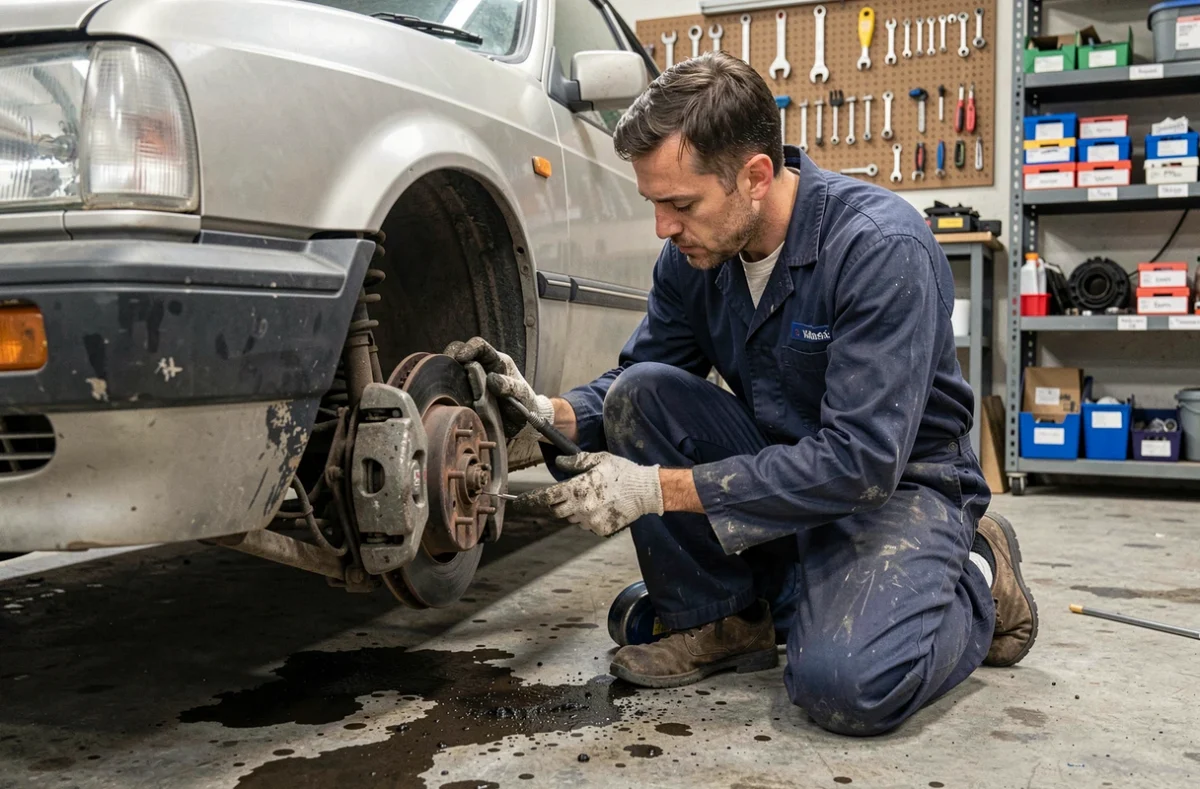
Solidarity garages are not just low-cost workshops. Their economic model, legal framework, and structural fragility deserve a technical reading, far from the general presentations that dominate the subject. Here, we analyze the concrete mechanisms that allow these structures to offer low-cost car maintenance and the limits they face.
Self-financing and subsidies: the real economic model of solidarity garages
A common misconception is that these structures rely on public subsidies. The available data tells a different story. Garage Solidaire 81, documented by La Dépêche in September 2026, indicates that subsidies account for only 12.8% of its budget. The rest comes from self-financing, contributions, and labor billing.
This ratio raises a fundamental question: viability depends on a sufficient volume of vehicles processed. However, the workforce often consists of employees in integration programs, supervised by a limited number of qualified mechanics. The repair throughput remains structurally lower than that of a traditional garage.
Spare parts represent another lever. The systematic use of used or refurbished parts allows for a reduction in material costs but requires regular supply through partner auto wreckers or donations from individuals. When this flow dries up, the structure absorbs the difference or extends the waiting times.
To identify active solidarity garages in a territory and verify the services offered, the information referenced on the website www.garages-solidaires.fr allows for cross-referencing location and available services.
SIAE accreditation and economic activity integration: a binding regulatory framework
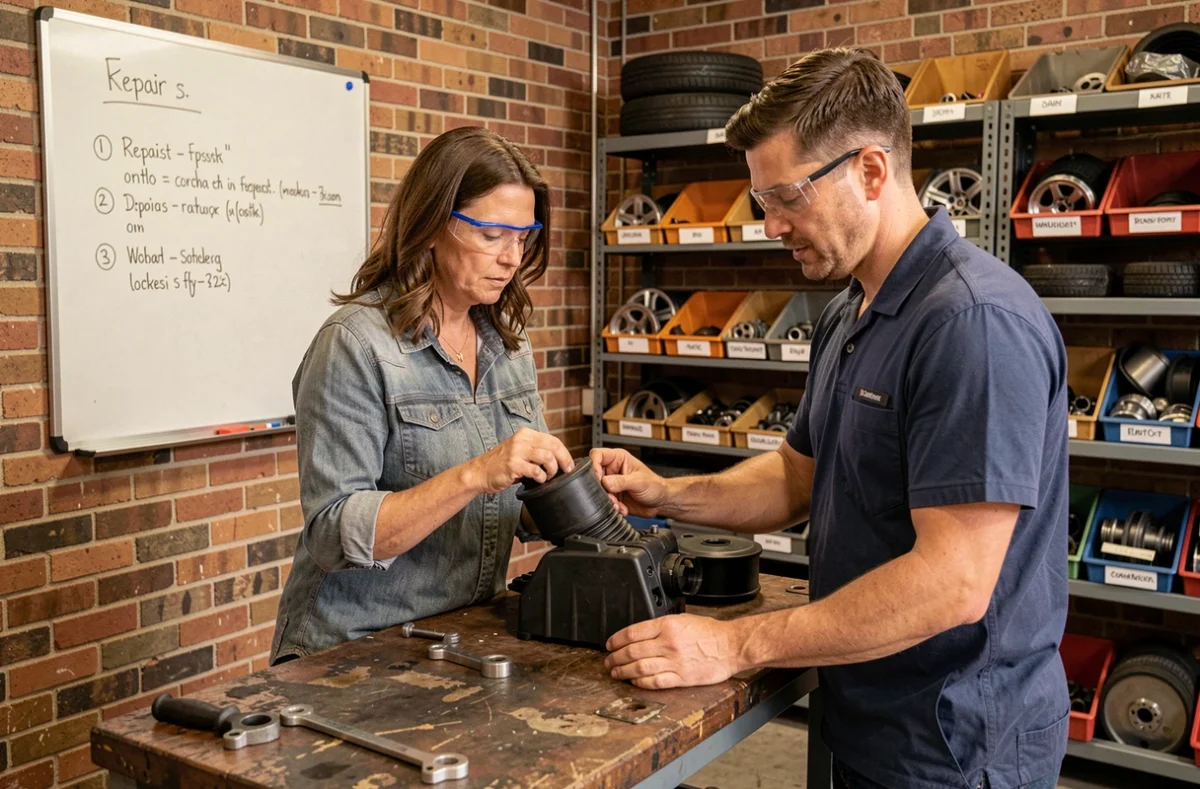
Some solidarity garages have accreditation granted by the State as a structure for integration through economic activity (SIAE). This status is not cosmetic. It involves individualized follow-up of employees in programs, provided by a professional integration advisor, and permanent technical supervision.
The accreditation conditions access to specific funding (job support, multi-year operational funding). In return, the structure must comply with reporting obligations, rotation of employees in integration, and rates of exit to sustainable employment. An accredited SIAE solidarity garage is not just a simple community workshop: it is an integration device where car repair is the support.
The Solidarauto network, for example, has formalized a quality approach with volunteer auditors to harmonize practices among member structures. We observe that this increasing professionalization responds to the demands of public funders as much as to a need for technical credibility.
Demand saturation and closures: the fragilities of the territorial network
The success of solidarity garages generates an operational paradox. A garage in Oise, documented by France 3 Hauts-de-France in September 2026, described a massive influx of students, job seekers, and low-income households exceeding its capacity. The demand exists. The supply does not always keep up.
Conversely, the closure of the only solidarity garage in the Rouen metropolitan area, reported by Paris-Normandie in September 2026, illustrates a systemic risk: when a garage closes, the entire local offer of solidarity mobility disappears. No automatic substitution mechanism exists. Users find themselves without a solution at a cost compatible with their budget.
The factors for closure are multiple:
- Insufficient multi-year funding to cover operations beyond the startup phase (equipment, rent, fixed costs)
- Difficulty in recruiting and retaining qualified technical supervisors, whose remuneration remains constrained by the associative model
- Dependence on a network of social partners (prescribing social workers, local authorities) whose priorities may evolve
The territorial network remains irregular. Some urban areas have several structures, while others have none.
Solidarity rental and mobility towards employment: an expanded scope
The model extends beyond repair. Several solidarity garages now offer low-cost vehicle rentals, targeted at people returning to work or in training. These fleets are made up of donations from individuals or companies, restored by employees in integration.
This rental aspect meets a documented need: without a vehicle, access to employment in suburban or rural areas becomes a concrete obstacle. The FASTT (Social Action Fund for Temporary Work) directs temporary workers to these devices when their personal vehicle is immobilized.
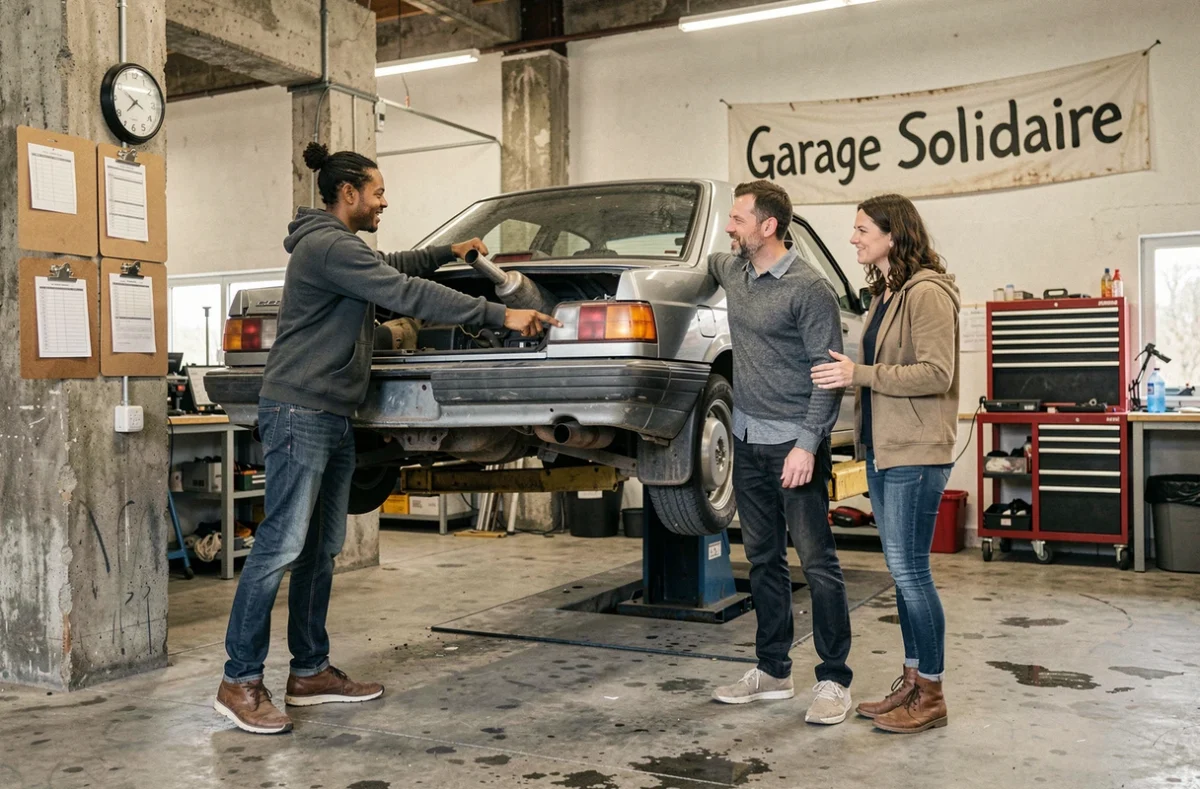
The legislative proposal put forward by Deputy Benoît Biteau, reported by Sud Ouest in September 2026, aims to have solidarity garages recognized as structures of general interest. If this recognition is achieved, it could open access to favorable tax arrangements for donors and stabilize the funding of these structures.
Access criteria and social prescription: who can truly benefit
Access to solidarity garages is not open. Most structures condition entry on a family quotient below a locally defined threshold or on a prescription by a social worker (social assistant, Pôle emploi advisor, RSA referent).
This access filter serves a dual function: it targets priority audiences and regulates the flow in structures with limited capacity. In practice, the profiles welcomed are:
- RSA beneficiaries or recipients of social minima referred by their advisor
- Job seekers whose mobility is a condition for returning to work
- Students and young workers with modest incomes, on social prescription
We recommend that interested individuals contact the communal social action center (CCAS) of their municipality, which directs them to the nearest structure and provides the necessary prescriptions.
The solidarity garage remains a conditional access device, not a discount garage open to all. This distinction explains why the capacity cannot ever meet the total demand, and why the sustainability of each structure depends on a fragile balance between self-financing and institutional support.