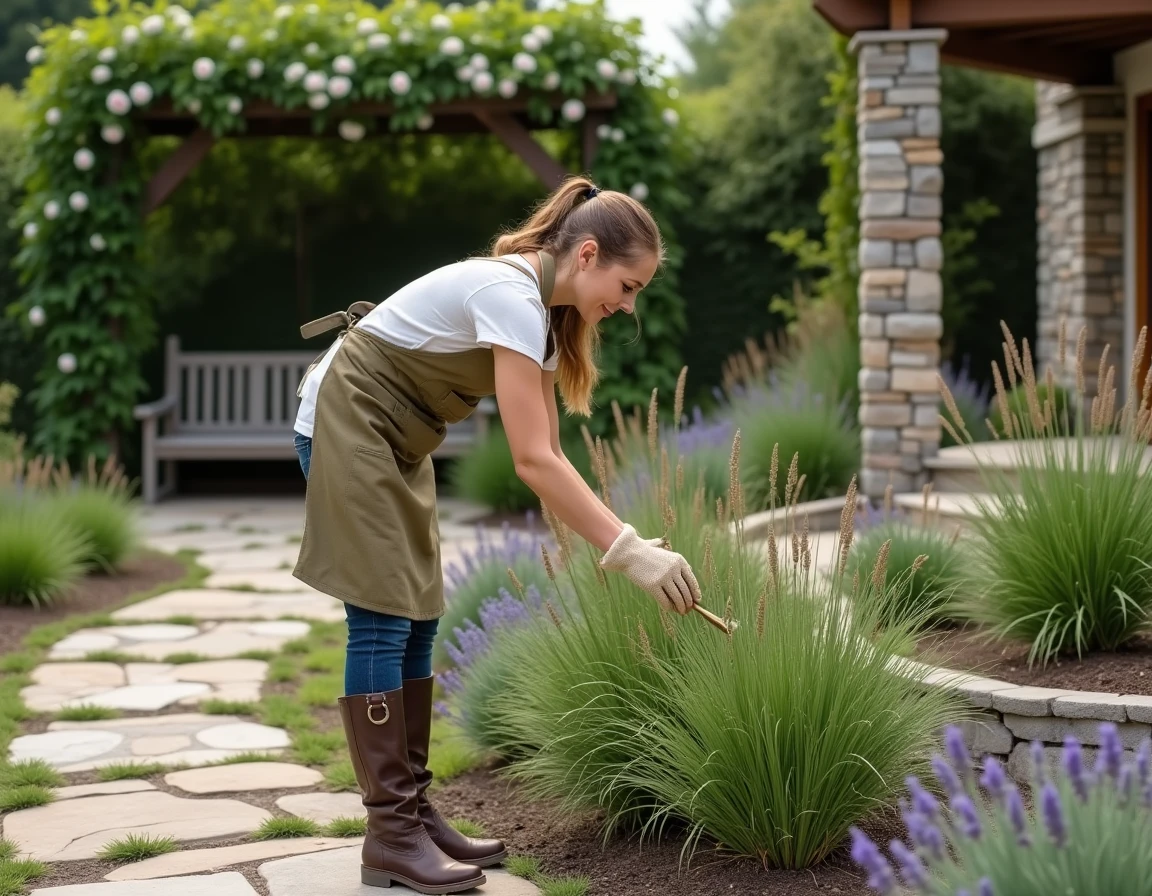
A grassy area with a few randomly planted shrubs does not make a landscaped garden. What makes the difference is the reading of the space: how the eye moves, where the foot stops, which textures respond from one area to another. Creating an elegant and welcoming landscaped garden at home relies less on a high budget than on coherent choices of structure, plants, and materials.
Prohibited plants and local constraints: what to check before drawing
Before choosing any plants, a regulatory check is essential. Article L411-6 of the Environmental Code regulates certain invasive exotic species: their introduction, cultivation, and even sale may be prohibited. Official lists evolve, and a very decorative plant in a nursery may be among the prohibited species.
Hedges, often the first reflex for structuring a garden, are subject to rules that vary according to prefectural orders, subdivision regulations, or co-ownership rules. The Environmental Code also protects the nests and broods of wild birds. A hedge is not designed solely based on aesthetic criteria: the pruning period and the planting distance from property boundaries must be checked locally.
Consulting the local urban planning plan of your municipality before planting a tall tree or installing a living fence avoids costly surprises. Landscapers who regularly work in a geographical area are familiar with these constraints. Professionals like those listed on les-jardins-de-camille.fr can guide these initial decisions based on the terrain and applicable regulations.
Replacing the uniform lawn with water-efficient planted areas
Have you noticed that the most watered lawns are often the least visually interesting? A stretch of uniform green grass requires a lot of water, regular maintenance, and offers neither relief nor texture diversity.
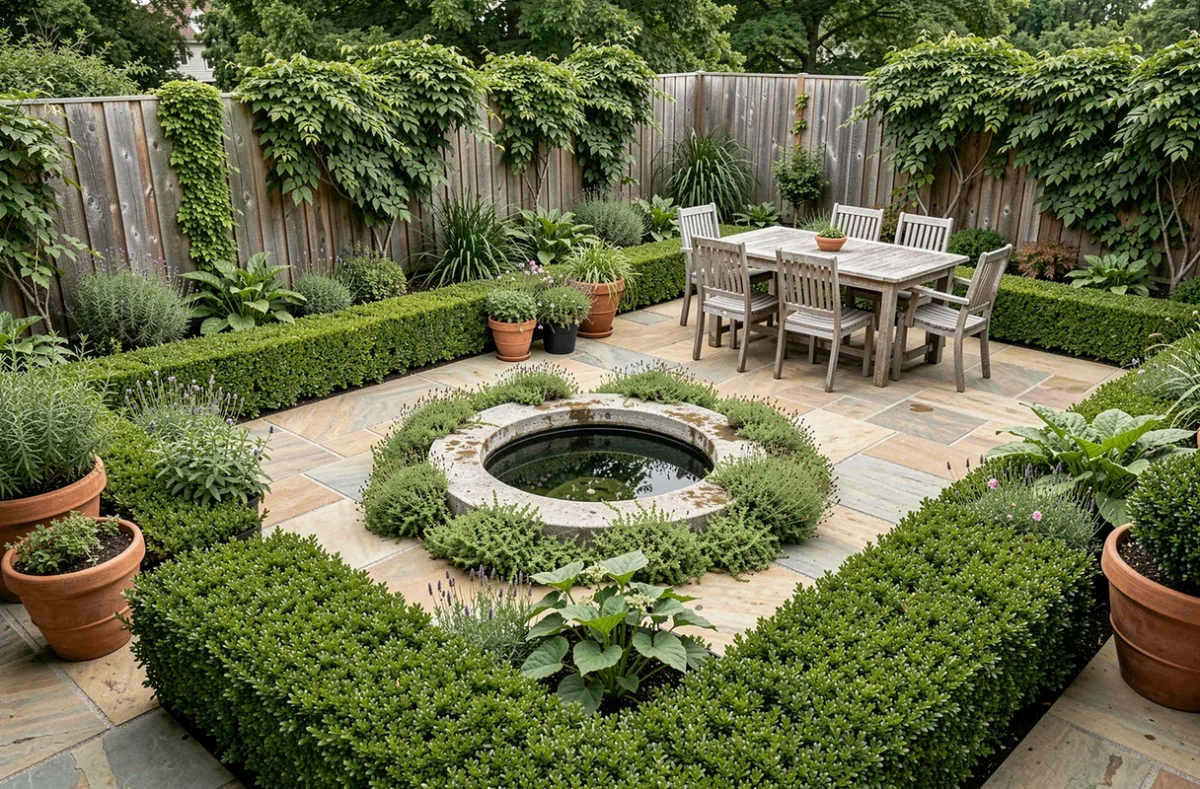
Replacing part of the lawn with ground covers and drought-resistant plants transforms the garden’s appearance while reducing dependence on watering. Dry gardens, inspired by Mediterranean landscapes, use ornamental grasses, sedums, or creeping thymes that colonize the soil without intensive irrigation.
Rainwater harvesting complements this approach. A simple collector connected to a downspout supplies watering for the flower beds during dry spells. The idea is not to eliminate all grass but to confine it to living areas (play, relaxation) and entrust the rest to diverse plantings.
Three families of plants for a water-efficient landscaped garden
- Evergreen ground covers (creeping thyme, blue fescue, dwarf yarrow): they cover the ground, limit weeding, and remain green without frequent watering
- Ornamental grasses (miscanthus, stipa, pennisetum): they bring movement and light textures, particularly beautiful in autumn and winter
- Evergreen shrubs suited to the local climate: they structure the garden year-round and serve as a backdrop for seasonal blooms
Creating distinct living areas in a small garden
A welcoming garden is not an open space where everything is visible at a glance. Dividing the land into zones creates depth and intimacy, even in a small area. The principle is simple: each zone has a function, and the transition between them occurs through a change in material, level, or vegetation.
A dining area on a wooden or natural stone terrace. A planted passage leading to a more secluded relaxation space. A generous flower bed that partially obscures the view and invites exploration of what lies behind. These transitions punctuate the stroll through the garden and avoid the “flat” effect of featureless layouts.
The choice of ground materials
Materials contribute as much as plants to the elegance of the landscaped garden. Wood (terraces, stepping stones), natural stone (slabs, low walls), and stabilized gravel create visual and tactile contrasts with the planted areas.
Limiting the palette to two or three materials gives coherence to the whole. Multiplying coverings (resin, concrete, composite wood, gravel, slate) on a small plot fragments the view and produces the opposite effect of what is desired.

Perspectives and focal points: what gives style to the landscaped garden
Why do some gardens seem larger than they are? The answer often lies in the management of perspectives. Placing an attractive element at the back of the plot (a remarkable tree, a jar, a stone bench) visually elongates the space and guides the gaze.
A well-placed focal point structures the entire garden around it. Planting lines, paths, and borders naturally converge towards this landmark. This also works in a narrow city garden: a trellis covered with climbing plants at the back of the plot creates a depth that a bare wall does not provide.
The curved shapes of the flower beds enhance this effect. Winding borders, unlike straight lines, slow the gaze and give the impression of a more expansive space. Alternating low plants in the foreground and taller shrubs in the background adds depth to the picture.
Lighting to extend the use of the garden
Subtle lighting transforms the garden into a living space in the evening. A few recessed spots along a path, a simple string of lights above the table, a spotlight directed at a tree or a low wall are sufficient. Lighting reveals the volumes and textures that daylight flattens.
Low-voltage solar systems, positioned in strategic areas, allow for lighting without complex wiring. The goal is not to illuminate the garden like a parking lot but to create islands of warm light that extend the conviviality after sunset.
The most successful landscaped garden is one that makes you want to stay in it, not just look at it from the window. Structuring the space, limiting materials, choosing plants suited to the local climate: these three axes are enough to transform a mundane plot into a place where one can live outdoors for several months a year.